
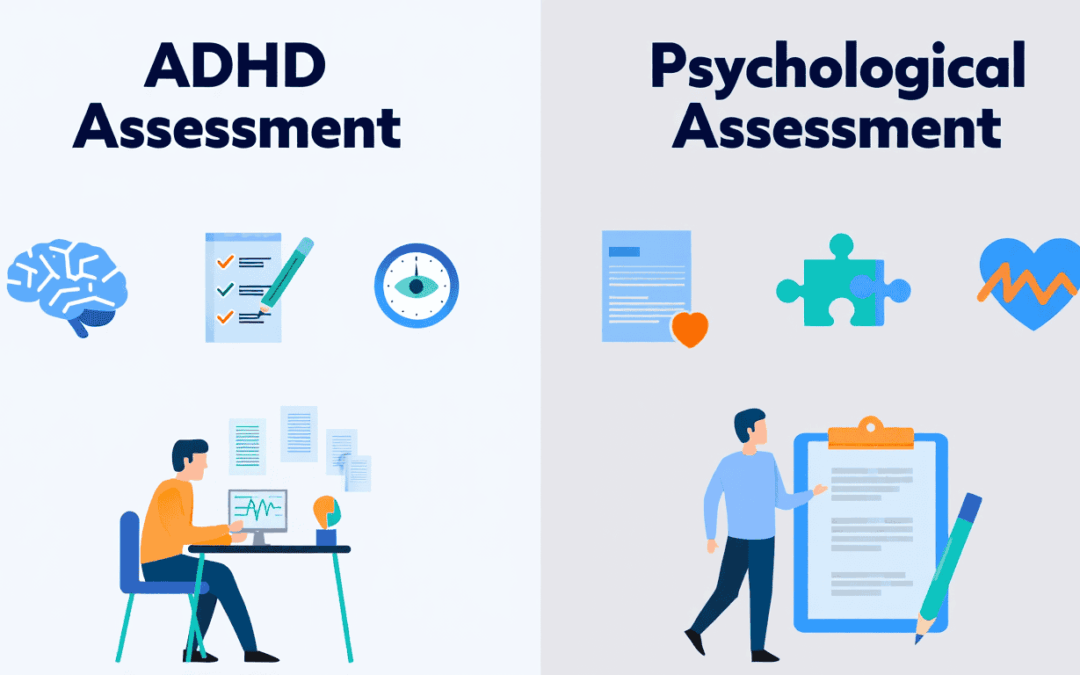
If you or a loved one is struggling with attention, focus, emotional regulation, learning challenges, or mental health concerns, you may have come across two commonly recommended options: ADHD assessments vs psychological assessments. While they sound similar, they serve different purposes—and choosing the right one can save time, money, and frustration.
For individuals, parents, educators, and employers across Ontario, understanding the difference between these assessments is essential for getting accurate answers, proper documentation, and effective support.
This guide breaks it all down in plain language, using real-world examples, expert insight, and practical advice to help you make an informed decision.
What Is an ADHD Assessment?
An ADHD assessment focuses specifically on identifying whether a person meets diagnostic criteria for Attention-Deficit/Hyperactivity Disorder (ADHD). In Ontario, these assessments are commonly used for:
- Children struggling in school
- University students seeking academic accommodations
- Adults experiencing chronic disorganization, inattention, or impulsivity
- Workplace accommodation requests
An ADHD assessment looks at how attention, executive functioning, impulse control, and hyperactivity affect daily life across settings such as school, work, and home.
Key goal: Determine whether ADHD is present and how it impacts functioning.
What Is a Psychological Assessment?
A psychological assessment is broader in scope. It evaluates cognitive, emotional, behavioural, and psychological functioning to answer complex questions about mental health, learning, and development.
Psychological assessments in Ontario may be used to assess:
- Learning disabilities
- Anxiety and mood disorders
- Autism spectrum disorder
- Intellectual giftedness
- Memory or processing challenges
- Personality and emotional regulation
Key goal: Develop a comprehensive understanding of how a person thinks, learns, feels, and behaves.
A Side-by-Side Comparison: ADHD Assessment vs. Psychological Assessment
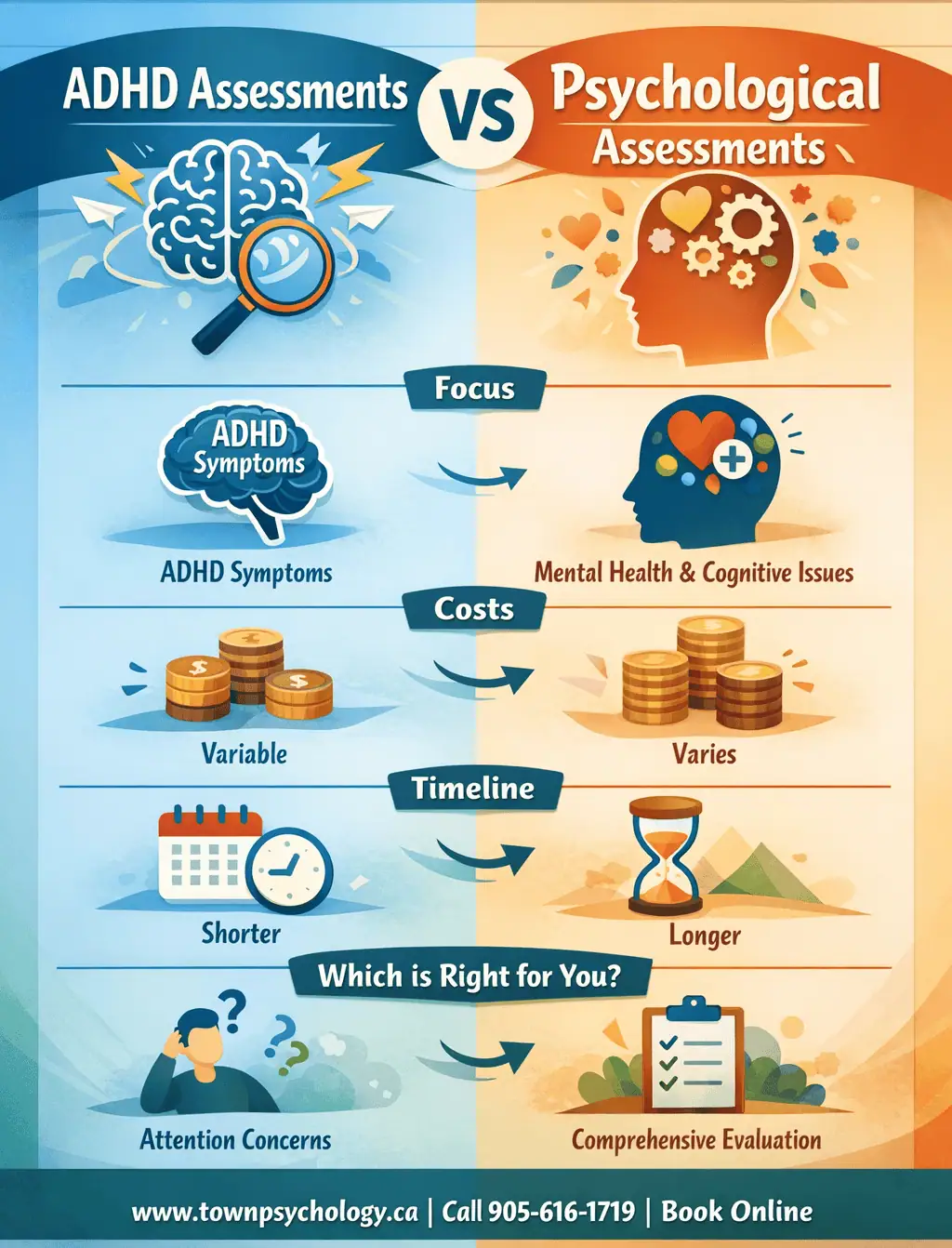
| Feature | ADHD Assessment | Psychological Assessment |
|---|---|---|
| Primary focus | ADHD symptoms only | Broad mental health & cognitive profile |
| Scope | Narrow, targeted | Comprehensive, multi-domain |
| Length | Shorter (often 4–8 hours total) | Longer (8–20+ hours) |
| Cost range in Ontario | Lower to moderate | Higher due to depth |
| Diagnostic clarity | ADHD-specific | Multiple diagnoses possible |
| Use cases | School/work accommodations, treatment planning | Complex learning, emotional, or developmental concerns |
| Who conducts it | Psychologist, psychiatrist, or trained clinician | Registered psychologist or psychological associate |
When an ADHD Assessment Is the Right Choice
An ADHD assessment may be sufficient if:
- Symptoms are clearly related to attention, impulsivity, or hyperactivity
- Challenges have been present since childhood
- Academic or workplace accommodations are the main goal
- Previous therapy or screening already suggests ADHD
Example: A 22-year-old university student in Toronto struggles with time management, task initiation, and exam performance despite strong intelligence. An ADHD assessment can confirm the diagnosis and support accommodation requests through the school’s accessibility office.
When a Psychological Assessment Makes More Sense
A full psychological assessment is often the better option when:
- Symptoms overlap with anxiety, depression, or learning difficulties
- Academic struggles are inconsistent or unexplained
- There are concerns about memory, processing speed, or emotional regulation
- A child is not responding to standard interventions
- Multiple diagnoses may be involved
Example: A 10-year-old student in Mississauga shows attention difficulties, emotional outbursts, and reading delays. A psychological assessment can determine whether ADHD, a learning disability, anxiety, or a combination of factors is contributing.
What the Assessment Process Looks Like in Ontario
Common Components of Both Assessments
Most assessments include:
- Clinical interviews
- Developmental and medical history
- Behavioural questionnaires (parent, teacher, or self-report)
- Standardized testing
- Review of school or workplace records
Psychological Assessments May Also Include:
- Cognitive (IQ) testing
- Academic achievement testing
- Emotional and personality measures
- Executive functioning and memory testing
According to the Canadian Psychological Association, comprehensive assessments improve diagnostic accuracy and treatment outcomes when symptoms are complex or overlapping.
Costs, Coverage, and Wait Times in Ontario
Cost Considerations
- ADHD assessments typically range from $1,500–$3,000
- Psychological assessments often range from $2,500–$5,500+, depending on depth
Insurance Coverage
- Many extended health plans in Ontario cover psychological services, often up to a yearly maximum
- Assessments may be partially reimbursed if conducted by a registered psychologist
Public vs. Private Options
- Public assessments (through hospitals or school boards) may have long waitlists
- Private clinics offer faster access and detailed reports, often required for accommodations
Why Proper Diagnosis Matters
Misdiagnosis can lead to:
- Ineffective treatment plans
- Missed accommodations
- Increased stress and self-doubt
- Delayed academic or career progress
A 2023 Canadian mental health survey found that nearly 30% of adults diagnosed with ADHD had at least one co-occurring condition, highlighting the importance of thorough evaluation.
“Attention problems rarely exist in isolation. A careful assessment ensures we treat the cause, not just the symptoms.” – Registered Psychologist, Ontario
ADHD in Adults: A Growing Assessment Need
Adult ADHD assessments are increasingly common across Ontario, especially among professionals who struggled quietly for years.
Common adult concerns include:
- Chronic procrastination
- Workplace burnout
- Difficulty managing multiple responsibilities
- Emotional dysregulation
Many adults first seek assessment after a child is diagnosed, realizing their own lifelong patterns.
Choosing the Right Assessment Provider
When selecting a clinic or professional, look for:
- Registration with the College of Psychologists of Ontario
- Experience with both ADHD and comprehensive psychological testing
- Clear explanation of process, costs, and timelines
- Detailed written reports accepted by schools, employers, and insurers
Don’t hesitate to ask whether the assessment includes differential diagnosis, which helps rule out other explanations for symptoms.
Making an Informed Decision
Choosing between an ADHD assessment and a Psychological assessment is not about which is “more thorough” it’s about what fits your needs right now.
If attention difficulties are clear and isolated, an ADHD assessment may be enough. If symptoms are layered, unclear, or affecting multiple areas of life, a full psychological assessment can provide clarity and direction.
Take the Next Step
If you’re considering an assessment in Ontario, don’t guess, get informed guidance from a qualified professional. Early clarity leads to better outcomes, whether that means academic accommodations, workplace support, or a personalized treatment plan.
Explore assessment options, ask the right questions, and take control of your mental well-being with confidence.
Frequently Asked Questions (FAQs)
Can a psychological assessment diagnose ADHD?
Yes. A psychological assessment can diagnose ADHD and also identify other contributing conditions that a standalone ADHD assessment might miss.
Do schools and universities in Ontario accept ADHD assessments?
Most post-secondary institutions accept assessments completed by qualified professionals, provided the report meets documentation standards.
Is one assessment “better” than the other?
Not necessarily. The best option depends on the complexity of symptoms and the questions you need answered.
Can children and adults be assessed the same way?
The tools and approach differ, but both children and adults can receive accurate diagnoses when assessments are age-appropriate.
How long does the assessment process take?
From intake to final report, timelines range from 2 to 6 weeks, depending on assessment type and provider availability.