
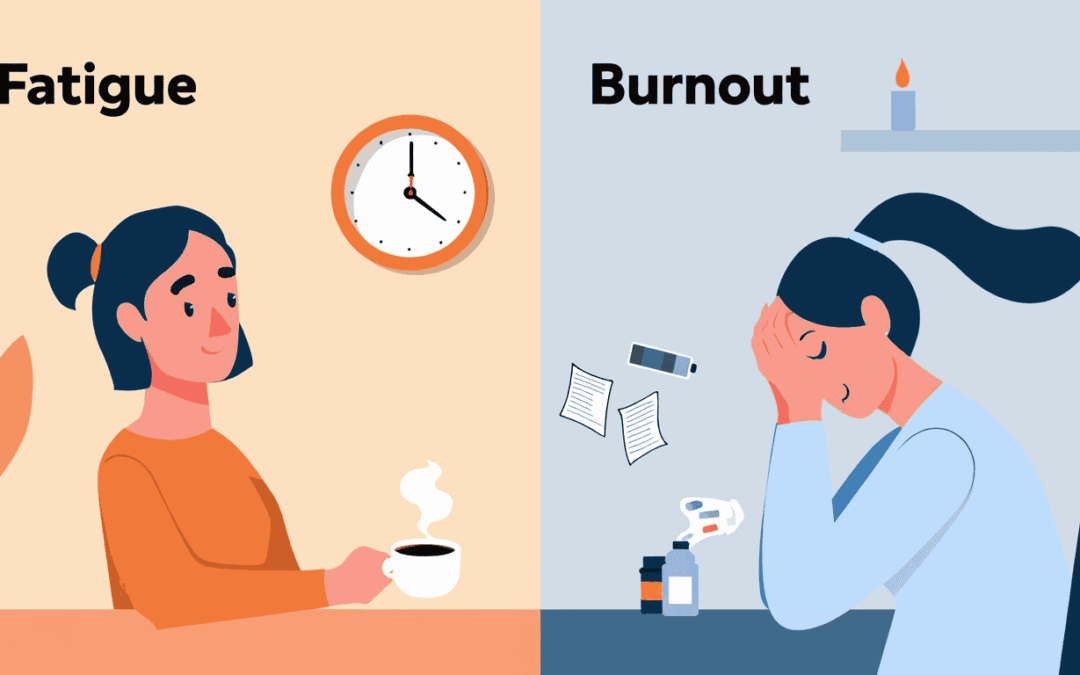
A quick overview of fatigue and burnout among caregivers
The burden of caring can take a lot out of you. There is a chance that you continue pushing forward due to the fact that your role of caring is too significant to stop. Yet, this constant giving slowly builds an emotional and physical toll. That is why individual therapy for caregiver burnout often turns into the lifeline for many families.When you have a heavy load of caring obligations, your body and the heart are triggered. There is a possibility of feeling emotionally low one day and deeply depressed following day. Gradually, this pattern leads to chronic anxiety. An experienced mental health professional near you can spot these symptoms earlier.Many caregivers feel confused, because they often mix stress with exhaustion. However, the difference matters more than you imagine. If you can understand the process that takes place in your body, you will gain the capacity to keep yourself healthy and fulfill your caregiving job.What is caregiver burnout
Caregiver burnout often feels like a slow fading of hope. You may still do your tasks, yet you no longer feel present. The emotional weight grows heavier each day. You may stop enjoying small moments with the person you support.This state grows when caregiver stress builds without relief. You keep giving, yet you receive little rest. As time passes, pressure reduces your mental and physical energy. Family caregivers often feel stuck between work and exhaustion.Burnout also affects how you see yourself. You may feel guilty for feeling tired. You may doubt your ability to care. This cycle then pushes you deeper into stress. However, a skilled health professional often helps you notice these signs before they deepen.Because burnout often stays hidden, many caregivers delay seeking support. Yet, early care protects your health and your loved one’s comfort.Understanding Caregiver Burnout vs Fatigue
In order to protect your wellbeing, you have to be aware of what your heart and body are going through. Though burnout and fatigue may appear similar, they affect your role as a caregiver in completely distinct manners.Fatigue affects your body first
You feel tired after long caregiving hours. Your muscles feel heavy. Yet, a good night of sleep often brings back some energy.Burnout reaches your heart and mind
You feel drained even after rest. Motivation fades and you may start feeling emotionally numb during your caregiving role.Fatigue still leaves space for joy
You can still laugh or enjoy small moments, even while experiencing fatigue.Burnout slowly takes that joy away
It makes things feel boring. In time the emotional burden may cause persistent stress or sadness.Burnout changes how you see your life
Your personal life and relationships often feel distant. You may question your ability to care with patience and warmth.Support makes a real difference
An experienced psychotherapist near you can help understand the changes. They can help you return to the balance of your emotions while also respecting the caregiving obligations you have.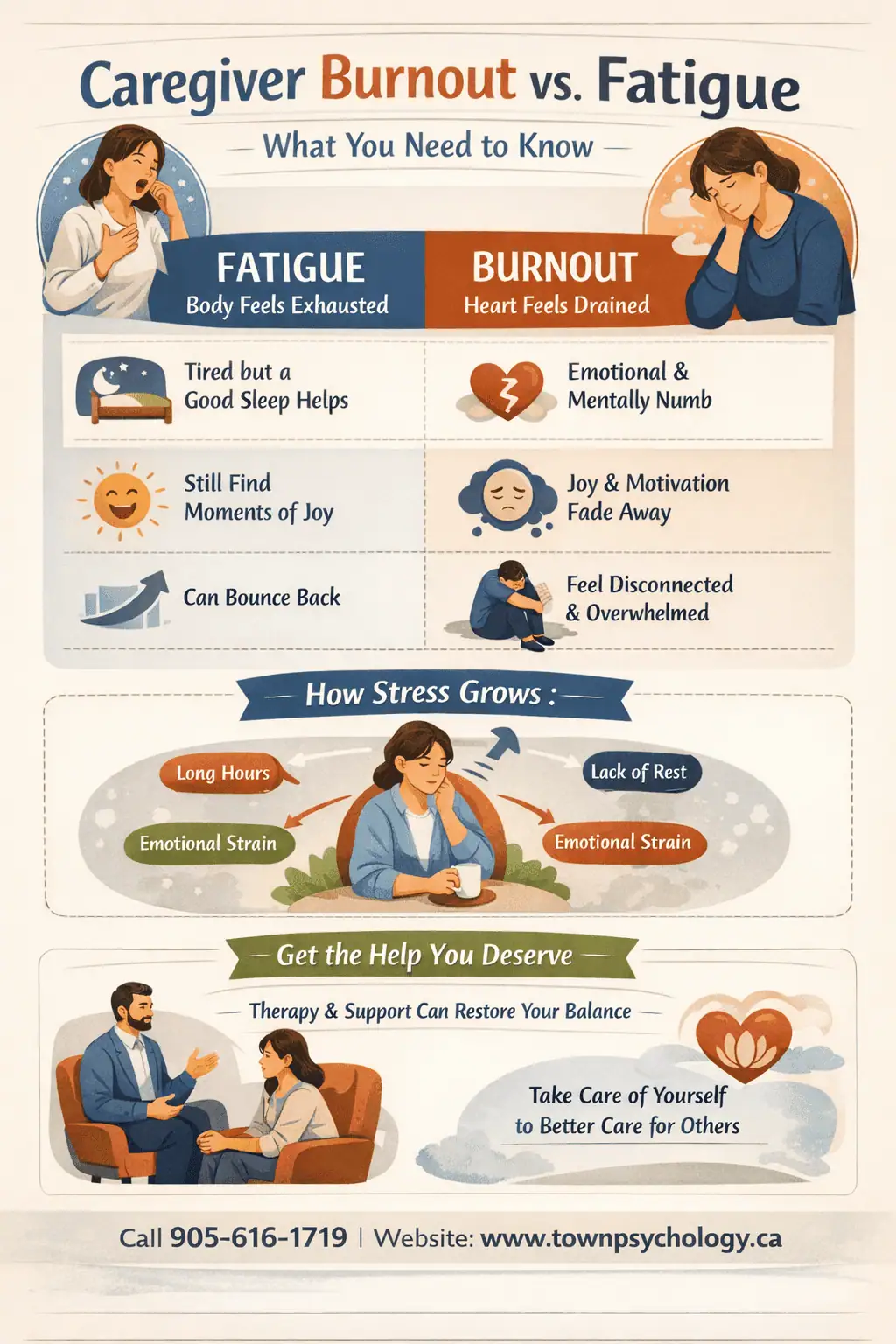
How caregiver stress grows
Caregiver stress often starts quietly. You may feel a bit tired. Yet, you keep going because someone depends on you. Over time, the cost of caring grows heavier.Long hours and limited rest strain your emotional and physical health. You may skip meals or forget your own needs. This can reduce your resilience.Family caregivers can feel isolated on this path. Although others can assist, it is possible to feel the burden of your emotions. This feeling then shapes how you think and feel.Because this stress can lead to chronic issues, gentle support matters. Healthcare professionals often suggest holistic care that looks at both mind and body.When fatigue turns deeper
Fatigue is often caused by sleeping insufficiently or having prolonged work hours. However, if fatigue is mixed with emotional stress the effect can be exacerbated. You may feel foggy or detached. You may struggle to enjoy simple moments.This blend of tiredness and emotional strain leads to caregiver burnout and fatigue. You may feel both worn out and empty. This state of mind can affect your capacity to provide care and warm.Because of this shift, many caregivers seek individual therapy for caregiver burnout. This support offers space to talk, rest, and rebuild strength. A caring health professional helps you explore these feelings without judgment.The emotional weight you carry
Your caregiving role often holds deep love. Yet, it also carries fear and sadness. You may worry about the future. You may grieve small losses each day.This emotional weight often hides behind a brave face. You may smile while feeling broken inside. As time passes, this habit causes chronic stress.If you are feeling emotionally depressed, your heart is screaming for help. The need for support is then an act of strength. Mental health professionals can help you release your burdens.Why support changes everything
Getting support does not mean you are not good at your job. It means you value your health and your loved one’s comfort. Many caregivers find relief through individual therapy for caregiver burnout. This care helps you set boundaries and honor your needs.Psychotherapists can help you understand your emotions and develop new methods to deal with these feelings. It is often a way to restore your self-esteem.The holistic approach also incorporates easy habits. A short walk, a quiet moment, and shared laughter are all beneficial. The small things you do can protect the physical and mental health of your family.When you care for yourself, you also improve your ability to care.Preventing caregiver strain
Awareness is the initial state in preventing strain.
- You notice when stress rises.
- Pause when fatigue grows.
- You may set small limits.
- Reach out for help.
These steps protect your personal life and your heart.
Health care professionals usually assist caregivers with simple steps. They help both the mind as well as body. Over time, this care keeps burnout from taking over.
A gentle path forward
The role you play in caring for someone shapes their day-to-day comfort. Yet, you still need attention and consideration. When you provide space for contemplation, rest and small moments, you are ensuring your emotional and physical power. This balance lets you remain present, patient and in touch while you assist the person who relies on you.
Being a caregiver is filled with love as well as strain. Once you know the difference between fatigue and burnout you will gain a sense of the clarity you need. This clarity helps you protect your health as well as your caregiver responsibility.
With holistic care, gentle routines, and individual therapy for caregiver burnout, you can regain equilibrium. A trusted psychotherapist near you can walk with you along this journey.
Here is how we play a role:
- Clinical Assessments: We offer psychodiagnostic assessments to identify whether you are experiencing standard stress or have transitioned into clinical anxiety or depression.
- Targeted Therapy (CBT & ACT): Our specialists use Cognitive Behavioral Therapy (CBT) to reframe the guilt and “I’m not doing enough” thoughts common in caregivers, and Acceptance and Commitment Therapy (ACT) to help you manage the parts of caregiving that are out of your control.
- Emotional Regulation: Through DBT (Dialectical Behavior Therapy), they provide tools to handle the intense emotions—like frustration or grief—that often lead to feeling “emotionally numb.”
- Flexible Support: Offer both in-person sessions in Oakville and virtual therapy across Ontario, making it easier for busy caregivers to attend sessions without leaving their loved one for long periods.
- A Non-Judgmental Space: Provide a confidential environment to “release the burden” and talk about the difficult feelings (like resentment or exhaustion) that caregivers often feel they must hide.